The Oral History Association elections are now open. During the next six weeks, all current OHA members have the opportunity to vote for OHA first vice-president, member of Council, and three members of the Nominating Committee. We encourage al […]
Get thee to the polling stations! Voting will remain open through September 27th.
“The John W. Kluge Center at the Library of Congress has announced a new set of Kluge Fellowship in Digital Studies to examine the impact of the digital revolution on society, culture and international relations using the Library’s collections and resources. I am thrilled to have the chance to talk with Jason Steinhauer, Program Specialist with the Kluge Center about how this unique opportunity could fit with ongoing scholarship and research in digital stewardship.”
An excellent run-down of types of projects, considerations, & examples.
Inspired by Miriam Posner’s informative, “How Did They Make That?”, this post answers the equally ubiquitous question (one I often wonder myself), "Why did they make that?“
If you have been frustrated by the editorial model and the gatekeeping systems within traditional peer review, here is your chance to contribute to a new platform to re-envision scholarly publishing. This post introduces a experiment:DHThis.org, a new platform where a community instead of a small group of editors select the most valuable content within the digital humanities. DHThis is a news aggregator which “publishes” what the community votes to be the best or most relevant work. It is similar to Slashdot and Reddit, where registered users submit content which is then upvoted or downvoted by other members of the community. Only posts that have received enough votes by the community will be “published” on the front page of DHThis. DHThis provides an communal alternative to curating the best of “post-publication” digital humanities material. At the moment, the only other digital humanities publication venues for similar material are Digital Humanities Now and the Journal of Digital Humanities, both which still rely, at least in part, on an editorial model to curate content. DHThis flips this model, shifting the control of highlighting material to an entire community.
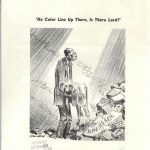
Pictured above: A political cartoon sent to JFK by cartoonist Don Hesse (from the Kennedy Library).
On September 15, 1963, four members of the Ku Klux Klan planted a box of dynamite under the steps of the 16th Street Baptist Church om Birmingham, Alabama, near the basement. At about 10:22 a.m., twenty-six children were walking into the basement assembly room when the bomb exploded. Four girls, Addie Mae Collins (14), Denise McNair (11), Carole Robertson (14), and Cynthia Wesley (14), were killed in the attack. Twenty two additional people were injured.
Immediately following the attacks, the White House was overwhelmed with mail, telegrams and donations to 16th Street Church.
An oral history interview with Beverley Bryan, covering her years as a member of the British Black Panther Movement in the UK. Including her memories of her time teaching in supplementary schools.
The interview was recorded on Wednesday 28th August 2013. Conducted by Keanna Williams and Harriet Hundertmark. This recording is part of the Organised Youth Project.
Everyone should head over to OUPBlog (or Soundcloud) to listen to our latest podcast. This week, managing editor Troy Reeves speaks with our new book review editor, David J. Caruso.
For those who missed it the first time around, last Friday we spoke with our new book review editor David J. Caruso about how he became interested in oral history, his work with the Chemical Heritage Foundation, and the non-profit Oral History in the Mid-Atlantic region. Have a listen!
Everyone should head over to OUPBlog (or Soundcloud) to listen to our latest podcast. This week, managing editor Troy Reeves speaks with our new book review editor, David J. Caruso.
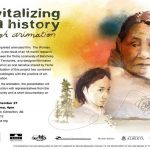
The recently completed animated film, The Woman Who Came Back, is the result of an 18 month research collaboration between the Tłı̨chǫ community of Behchokǫ in the Northwest Territories, and designer/filmmaker Adolpho Ruiz. Based on an oral narrative shared by Tłı̨chǫ elders, the visualization of this project has combined indigenous methodologies with the practice of art, design, and animation.
Before screening the animation, the presentation will include an introduction with representatives from the Behchokǫ community and a short documentary on the Tłı̨chǫ region.
The artistic purpose of this project is to translate a traditional Tłı̨chǫ Oral Story (the story of the Woman Who Came Back) into a short animated film. The visualization of this film involved a workshop-based collaboration between Tłı̨cho elders, young members of the Behchokǫ community, and animator/teacher Adolfo Ruiz who provided instruction throughout the production of the “Woman Who Came Back”. Tony Rabesca, Director of Language and Culture with the Tłı̨cho Government provided support and wisdom in making this project possible.
Edmonton Premier on Saturday, September 21 at the Metro Cinema, 4 pm.